
Alex Caputo-Pearl, an Oral History
Oral History
When Teachers Mobilize Oral Histories

When Teachers Mobilize Oral Histories
Not long ago, in the pages of this journal, I argued a number of propositions about the current state of historical research in the area of teacher unionism. One of those propositions was that a full explanation of the history of teacher union activity in the U.S.A. quite likely would require a three-pronged analysis involving the local, state, and national arenas.
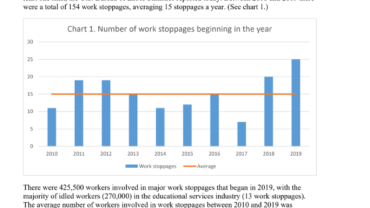
In 2019, there were 25 major work stoppages involving 1,000 or more workers and lasting at least one shift, the U.S. Bureau of Labor Statistics reported today. Between 2010 and 2019 there were a total of 154 work stoppages, averaging 15 stoppages a year.
In 1907, Grace Strachan, a school principal and leader of New York’s Interborough Association of Women Teachers (IAWT), explained the significance of the organized teachers’ campaign. “I don’t think any of us are working simply for our own interests,” she offered.
In 2007, the National Education Association celebrated its 150th year. Over this time, NEA has been a driving force in education at all levels.
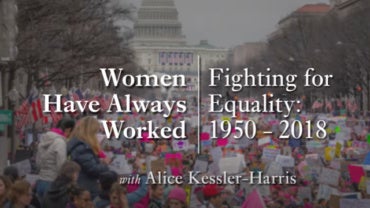
Women Have Always Worked: Fighting for Equality: 1950–2018.
An exploration from an online edX course.
When Teachers Mobilize Oral Histories
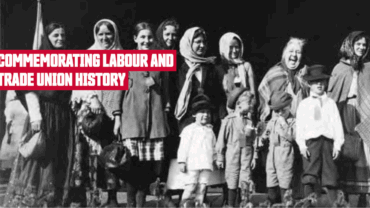
The International Trade Union and Labour Memory Network is a collaborative international project by a group of historians and labour activists. We aim to examine the commemoriation of labour history by highlighting what kind of labour and trade union memory work is undertaken across the globe, how trade unions use history and memory as a resource, and discuss the problems and challenges involved in commemoration.