
Women Have Always Worked, an edX Course Exploration, 51-60
Video Gallery
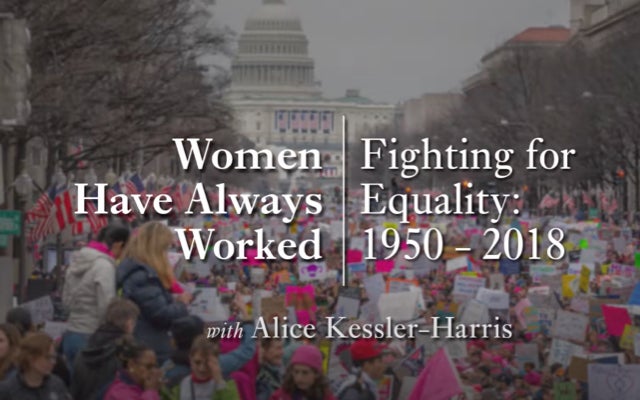
Women Have Always Worked: Fighting for Equality: 1950–2018.
An exploration from an online edX course.

The following are video previews from the edX course “Women Have Always Worked” presented by Alice Kessler-Harris and Columbia University.
Women Have Always Worked: Fighting for Equality: 1950–2018.
An exploration from an online edX course.
Women Have Always Worked: Fighting for Equality: 1950–2018.
An exploration from an online edX course.
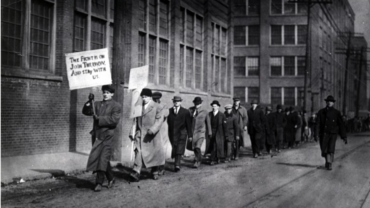
One of the most significant struggles for workers’ rights began on January 12, 1912, in Lawrence, Mass., when thousands of textile workers began a walkout that would come to be known as the Bread and Roses Strike, the Lawrence Textile Strike, and the Singing Strike. Read an overview and find teaching resources below.
As early as the 1830s, many U.S. states had enacted laws restricting or prohibiting the employment of young children in industrial settings. However, in rural communities where child labor on the farm was common, employment of children in mills and factories did not arouse much…
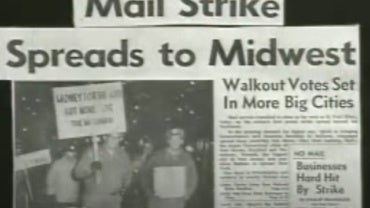
APWU remembers the Great Postal Strike of March 1970. For more background on the successful wildcat strike that earned postal workers the right to bargain collectively for better pay and benefits.
Women Have Always Worked: Fighting for Equality: 1950–2018.
An exploration from an online edX course.
Voices from the Dust Bowl: The Charles L. Todd and Robert Sonkin Migrant Worker Collection is an online presentation of selections from a multi-format ethnographic field collection documenting the everyday life of residents of Farm Security Administration (FSA) migrant work camps in central California in…
“Culture becomes not a haven of ideas or a fixed state of experience but a social imaginary erupting out of a storied cultural real.” (Stewart 1996, 63-4)
I remember the day when my father, a West Virginia University professor, accompanied some of his students to Charleston for Undergraduate Research Day at the Capitol in February 2018.
The ongoing Red for Ed movement in Arizona sparks an interesting discussion on its place as a social movement. This thesis examines the movement in close detail, particularly in regard to how it fits within the social movement literature’s insider/outsider framework.