
thank you for visiting the labor history resource project as we build this resource!

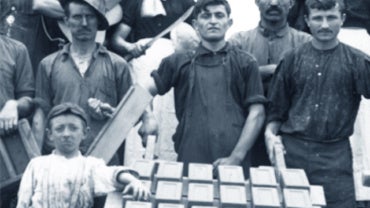
Just in time for a new academic year, the American Social History Project at the CUNY Graduate Center is releasing a new, expanded, and updated edition of the popular textbook Who Built America? Working People and the Nation’s History. A beta version is now available…
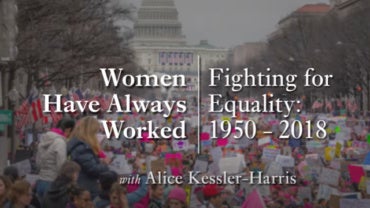
Women Have Always Worked: Fighting for Equality: 1950–2018.
An exploration from an online edX course.
If the 1960’s were known as the era of vigorous student militancy in most sectors of American education, the 1970’s may well go down in history as the decade of the angry teacher.
The Iowa Labor History Oral Project (ILHOP) is an innovative statewide initiative to document Iowa’s rich labor and working class history through the collection and preservation of oral histories. A joint project of the Iowa Federation of Labor (AFL-CIO), the University of Iowa Labor Center,…
While studies of the New York City Teachers Union (TU) generally attribute its eventual demise to the Red Scares of the 1940s and 1950s, this article situates the TU in the history of New York City teachers associations more generally.
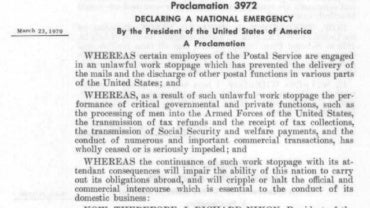
“Wildcat” strikes, like the one that teachers used effectively in West Virginia in February/March of this year, are when union members walk off the job despite the wishes of their leadership. By definition, they are something uncontrollable and spontaneous.
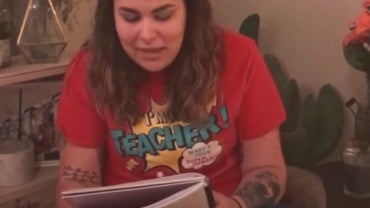
The repeated argument I hear from people who are opposed to Oklahoma teachers walking out tomorrow is “we knew what we were doing when we signed up for this.” You’re right. We did. We signed up for the hardest job in the world and putting our kids first. Here’s a poem about it.
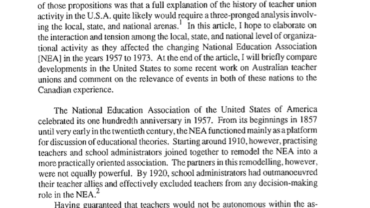
Not long ago, in the pages of this journal, I argued a number of propositions about the current state of historical research in the area of teacher unionism. One of those propositions was that a full explanation of the history of teacher union activity in the U.S.A. quite likely would require a three-pronged analysis involving the local, state, and national arenas.
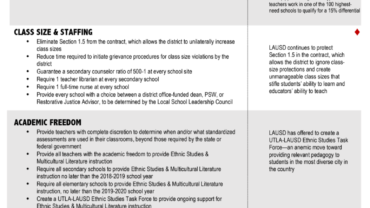
A report covering salary, class size & staffing, academic freedom, shared decision making, assignments and more.