
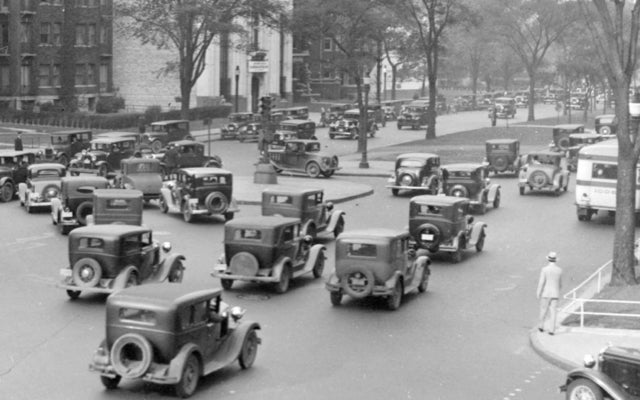
thank you for visiting the labor history resource project as we build this resource!

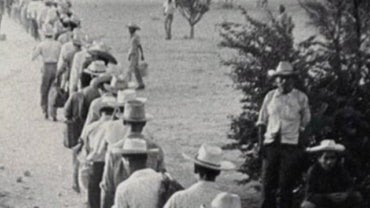
The Bracero History Archive collects and makes available the oral histories and artifacts pertaining to the Bracero program, a guest worker initiative that spanned the years 1942-1964. Millions of Mexican agricultural workers crossed the border under the program to work in more than half of…
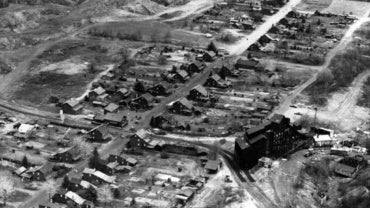
Perched atop a mountain ridge at the center of one of the planet’s largest concentrations of disturbed terrain, Eckley Miners’ Village is a world within a world. Visit our authentic 19th-century company mining town, and experience the lives of the working-class families who once fueled America.
The Knights of Labor was the largest and most extensive association of workers in 19th century America. Organized in 1869, the movement grew slowly in the 1870s, then surged in the 1880s, reaching a peak membership approaching one million in 1886-1887 with Local Assemblies spread across the country in more than 5,600 cities and towns.
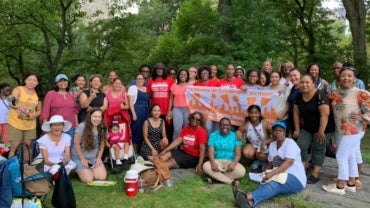
Domestic work is the work that makes all other work possible. Together, we can win the protections and recognition that this vital American workforce needs. Join us today!
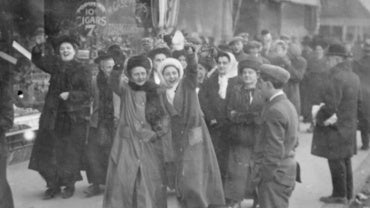
The Lawrence Textile Strike was a public protest mainly of immigrant workers from several countries, including Austria, Belgium, Cuba, Canada, France, England, Germany, Greece, Ireland, Italy, Lithuania, Netherlands, Norway, Poland, Portugal, Russia, Scotland, Spain, Syria, and Turkey. According to the 1910 census, 65% of mill workers (many of whom eventually struck) lived in the United States for less than 10 years; 47% for less than five years.
This project produces and displays free interactive maps showing the historical geography of dozens of social movements that have influenced American life and politics since the start of the 20th century, including radical movements, civil rights movements, labor movements, women’s movements, and more. Until now…

Voices from the Dust Bowl: The Charles L. Todd and Robert Sonkin Migrant Worker Collection is an online presentation of selections from a multi-format ethnographic field collection documenting the everyday life of residents of Farm Security Administration (FSA) migrant work camps in central California in…
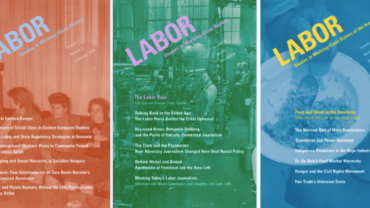
LABOR: Studies in Working-Class History is the official journal for the Labor and Working-Class History Association (LAWCHA), and is housed at the Kalmanovitz Initiative for Labor and the Working Poor at Georgetown University. A subscription to LABOR is available through membership in LAWCHA.
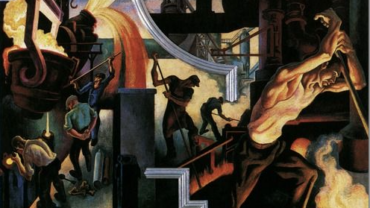
From the first national strike in 1877 to the nation’s first unionized Apple store, Maryland workers have long been at the center of labor history, fighting in the name of a better, more just life for all. As the state of Maryland celebrates its 250th anniversary, Maryland250 Labor History aims to ensure that we not only remember and celebrate this legacy, but treat it as a guide for our future.
A collaborative and volunteer-run project, MD250 Labor History is bringing this history to life through historical documents, podcasts, walking tours, videos, and more. We hope it will serve as a robust resource for generations of workers to come.