
Women Have Always Worked, an edX Course Exploration, 81-90
Video Gallery
Women Have Always Worked: Fighting for Equality: 1950–2018.
An exploration from an online edX course.

The following are video previews from the edX course “Women Have Always Worked” presented by Alice Kessler-Harris and Columbia University.
Women Have Always Worked: Fighting for Equality: 1950–2018.
An exploration from an online edX course.
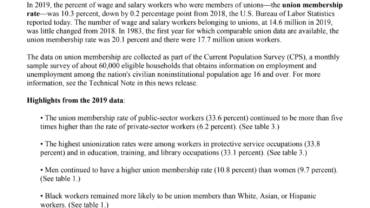
In 2019, there were 25 major work stoppages involving 1,000 or more workers and lasting at least one shift, the U.S. Bureau of Labor Statistics reported today. Between 2010 and 2019 there were a total of 154 work stoppages, averaging 15 stoppages a year.
When Teachers Mobilize Oral Histories
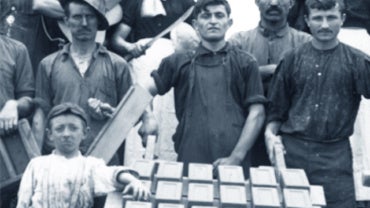
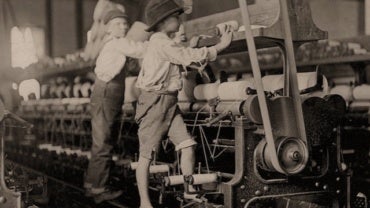
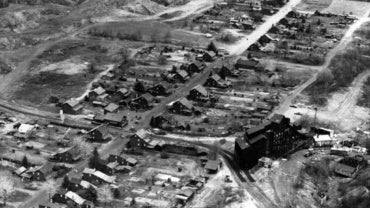
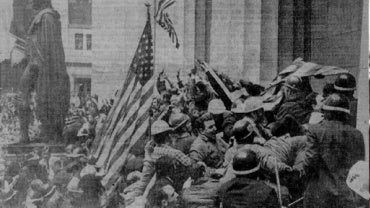
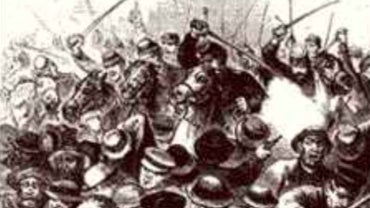
One of the most significant struggles for workers’ rights began on January 12, 1912, in Lawrence, Mass., when thousands of textile workers began a walkout that would come to be known as the Bread and Roses Strike, the Lawrence Textile Strike, and the Singing Strike. Read an overview and find teaching resources below.
The Tamiment Library and Robert F. Wagner Labor Archives at New York University form a unique, internationally-known center for scholarly research on Labor and the Left. The primary focus of our collections is the complex relationship between trade unionism and progressive politics, and how this…
Designed for both high school and college classrooms, History Matters helps students actively interpret evidence about the lives of ordinary Americans. It contains descriptions of and links to more than 1000 websites and first-person primary source documents, guides for analyzing historical evidence, classroom activities, and…
The ongoing Red for Ed movement in Arizona sparks an interesting discussion on its place as a social movement. This thesis examines the movement in close detail, particularly in regard to how it fits within the social movement literature’s insider/outsider framework.
In early summer 1982 an estimated 20,000 garment workers in New York City, members of ILGWU Local 23-25 and mostly Chinese immigrant women, walked off the job in protest. This collection from LaborArts memorializes the 40th anniversary of this historic action.
The Lowell mill girls were young female workers who came to work in industrial corporations in Lowell, Massachusetts, during the Industrial Revolution in the United States.