
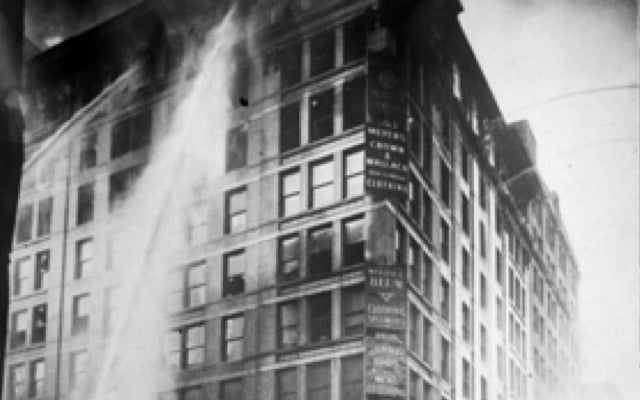
Remembering the 1911 Triangle Factory Fire
History Site
Created ByKheel Center for Labor-Management and Archives, Cornell UniversityAreaResourcesMain CollectionHistory SitesShare

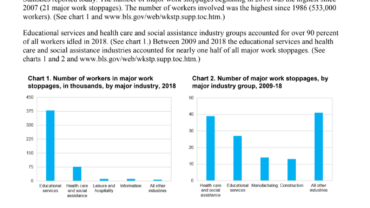
In 2018, there were 20 major work stoppages involving 485,000 workers, the U.S. Bureau of Labor Statistics reported today. The number of major work stoppages beginning in 2018 was the highest since 2007 (21 major work stoppages). The number of workers involved was the highest since 1986 (533,000 workers).
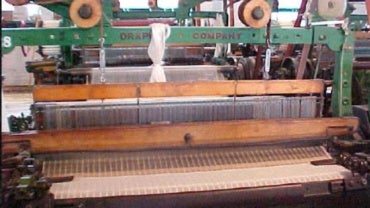
In 1820 Lowell, known as East Chelmsford, MA at the time, had a population of 200 and was a farming community. Thirty years later, the population had grown to 33,000 and one could find 32 textile mills in existence there. Lowell was an ideal location for these mills because it was located near the Merrimac River. The river supplied the water necessary to run these factories.
Women Have Always Worked: Fighting for Equality: 1950–2018.
An exploration from an online edX course.
The Wayne State University Library System, through its digital publishing initiatives, strives to bring unique, important, or institutionally relevant content to Wayne State University’s academic community and to the larger world. Our Digital Collections represent text, images, and audiovisual material that support this mission through…

This collection presents 470 interview excerpts and 3882 photographs from the Working in Paterson Folklife Project of the American Folklife Center at the Library of Congress. The four-month study of occupational culture in Paterson, New Jersey, was conducted in 1994. The documentary materials presented in…
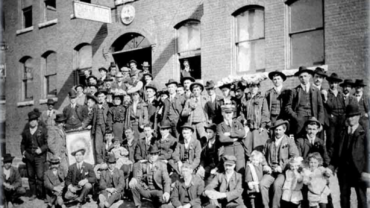
The Barre Historical Society is the historical society for the City of Barre, Vermont. It is the owner of two historic buildings, the Socialist Labor Party Hall National Historic Landmark and the Union Cooperative Store bakery building, being restored as the Rise Up Bakery.
The Westinghouse Works Collection contains 21 actuality films showing various views of Westinghouse companies. Most prominently featured are the Westinghouse Air Brake Company, the Westinghouse Electric and Manufacturing Company, and the Westinghouse Machine Company. The films were intended to showcase the company’s operations. Exterior and…
Women Have Always Worked: Fighting for Equality: 1950–2018.
An exploration from an online edX course.