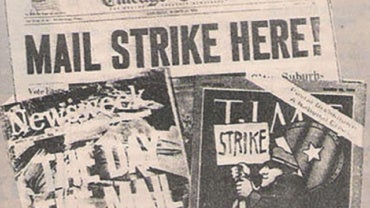

DTFE Caucus, Joel Berger Collection
Photo Gallery
A gallery of photos to explore.

A gallery of photos to explore.
From early in the 19th century through recent years, the Mahoning Valley has drawn new migrants and immigrants seeking economic opportunities and new homes. As those families settled in the area, they created the diverse cultural mix of our present day community. They brought new…
The Kheel Center for Labor-Management Documentation & Archives was founded in 1949 as the Labor-Management Documentation Center. Its continuing purpose is the preservation of original source materials relevant to the history of American labor unions, management theory as it applies to labor and industrial relations,…
On November 23, 1909, more than 20,000 Yiddish-speaking immigrants, mostly young women in their teens and early twenties, launched an eleven-week general strike in New York’s shirtwaist industry. Dubbed the Uprising of the 20,000, it was the largest strike by women to date in American history.
A gallery of photos to explore.
Voices from the Dust Bowl: The Charles L. Todd and Robert Sonkin Migrant Worker Collection is an online presentation of selections from a multi-format ethnographic field collection documenting the everyday life of residents of Farm Security Administration (FSA) migrant work camps in central California in…
In the town of Matewan, the West Virginia Mine Wars Museum sits at the site of a historic battle which erupted in May of 1920, setting into motion a chain of events that led to the largest armed uprising in the United States since our civil war.
On May 8, 1970, the Dow Jones Industrial Average dropped five points to finish at 717, in the slowest day of trading in months. In the streets outside the New York Stock Exchange, however, chaos erupted: at noon, hundreds of construction workers arrived on Wall…
In 1820 Lowell, known as East Chelmsford, MA at the time, had a population of 200 and was a farming community. Thirty years later, the population had grown to 33,000 and one could find 32 textile mills in existence there. Lowell was an ideal location for these mills because it was located near the Merrimac River. The river supplied the water necessary to run these factories.