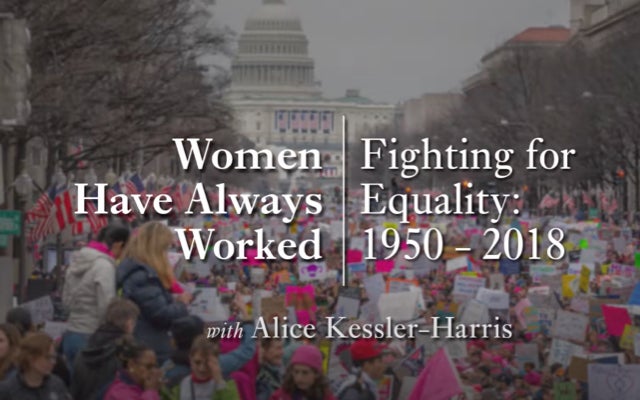
Women Have Always Worked, an edX Course Exploration, 61-70
Video Gallery
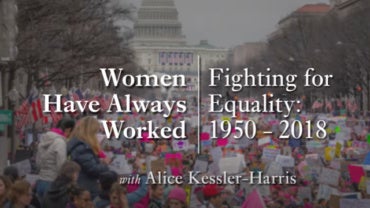
Women Have Always Worked: Fighting for Equality: 1950–2018.
An exploration from an online edX course.

The following are video previews from the edX course “Women Have Always Worked” presented by Alice Kessler-Harris and Columbia University.
Women Have Always Worked: Fighting for Equality: 1950–2018.
An exploration from an online edX course.
This site explores the controversial history of the Communist Party in the Pacific Northwest from 1919 to the present. The project is sponsored by the Harry Bridges Center for Labor Studies at the University of Washington and is one of the Pacific Northwest Labor and…
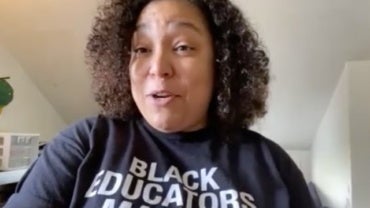
When Teachers Mobilize Oral Histories
The Bracero History Archive collects and makes available the oral histories and artifacts pertaining to the Bracero program, a guest worker initiative that spanned the years 1942-1964. Millions of Mexican agricultural workers crossed the border under the program to work in more than half of…
America at Work, America at Leisure: Motion Pictures from 1894-1915 consists of 150 motion pictures, 62 of which also appear in other online collections. The majority of the films are from the Paper Print Collection, while the remainder are from the George Kleine Collection, both…
The Knights of Labor was the largest and most extensive association of workers in 19th century America. Organized in 1869, the movement grew slowly in the 1870s, then surged in the 1880s, reaching a peak membership approaching one million in 1886-1887 with Local Assemblies spread across the country in more than 5,600 cities and towns.
In 1820 Lowell, known as East Chelmsford, MA at the time, had a population of 200 and was a farming community. Thirty years later, the population had grown to 33,000 and one could find 32 textile mills in existence there. Lowell was an ideal location for these mills because it was located near the Merrimac River. The river supplied the water necessary to run these factories.
Women and Social Movements in the United States, 1600-2000, is a resource for students and scholars of U.S. history and U.S. women’s history. Organized around the history of women in social movements in the U.S. between 1600 and 2000, the collection seeks to advance scholarly…
The site has been designed around the general idea of providing diversified, nonlinear access to digital audio content. Users can choose from a number of different modes of presentation, including audio essays, a timeline, strike map, and a user-friendly, yet very accurate search engine.
The film describes the extraordinary anti-slavery efforts taking place in the mid-19th century in Lowell. Forrant and Grooms visit the sites that still exist in downtown Lowell where abolitionist activity occurred and where freedom seekers operated businesses.