
Wisconsin Labor History
History Site
The Wisconsin Labor History Society is a volunteer-based organization working to record and catalogue the historical labor events of Wisconsin.

The Wisconsin Labor History Society is a volunteer-based organization working to record and catalogue the historical labor events of Wisconsin.
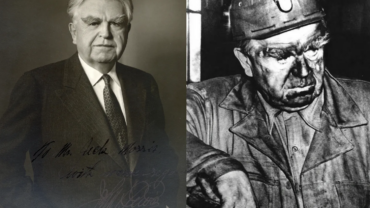
John L. Lewis was born February 12th 1880, to Welsh immigrant parents in the coal mining camp of Cleveland, Iowa- one mile East of Lucas, Iowa. He began working in the Big Hill Coal Mine in Lucas, IA as a teenager, joining the UMWA Local #799 in 1900. He began his rise to power in the United Mine Workers of America and served as President of the UMWA for forty years and was founder of the Congress of Industrial Organizations.
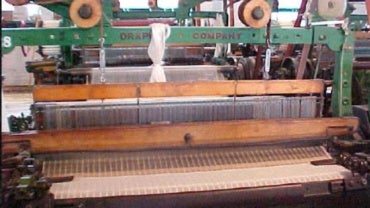
In 1820 Lowell, known as East Chelmsford, MA at the time, had a population of 200 and was a farming community. Thirty years later, the population had grown to 33,000 and one could find 32 textile mills in existence there. Lowell was an ideal location for these mills because it was located near the Merrimac River. The river supplied the water necessary to run these factories.

This website, a joint project between the Walter P. Reuther library and the Wayne State University Library, will host primary resources from the AFT historical collections that will document various education reform initiatives that union and school boards have collaborated on, from pre-Nation at Risk…
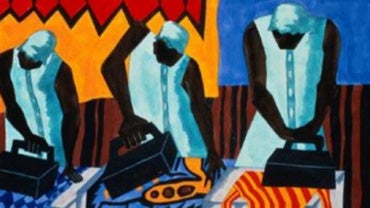
This bibliography contains a number of titles dealing with “workers,” the “world of work” generally, and “labor law” in particular, so as to account for some of the more compelling reasons we should assiduously attend to the complex economic and moral questions (the former often…
The Center for Working-Class Studies (CWCS) at Youngstown State University (YSU) was the first academic program in the U.S. to focus on issues of work and class. CWCS members have been at the forefront of “new working-class studies,” an international movement that brings together academics,…
In 1907, Grace Strachan, a school principal and leader of New York’s Interborough Association of Women Teachers (IAWT), explained the significance of the organized teachers’ campaign. “I don’t think any of us are working simply for our own interests,” she offered.

This multimedia website explores the history and consequences of the Seattle General Strike of 1919. Below you will find original research articles, digitized newspaper articles and other important documents, photographs, and extensive bibliographic materials. Visit site
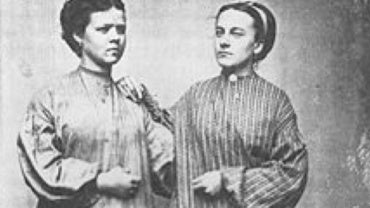
In the early 19th century the United States of America began to experience many changes. In parts of the country there was a shift from an agrarian society to an industrial society.