
thank you for visiting the labor history resource project as we build this resource!

The International Trade Union and Labour Memory Network is a collaborative international project by a group of historians and labour activists. We aim to examine the commemoriation of labour history by highlighting what kind of labour and trade union memory work is undertaken across the globe, how trade unions use history and memory as a resource, and discuss the problems and challenges involved in commemoration.
Part of the City University of New York, the American Social History Project is a recognized leader in effective, engaging history education. Who Built America Badges for History Education is designed for Grade 7-12 teachers
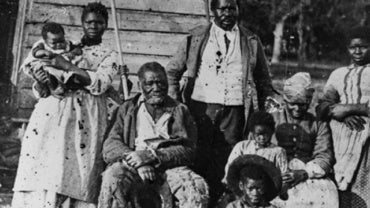
The film describes the extraordinary anti-slavery efforts taking place in the mid-19th century in Lowell. Forrant and Grooms visit the sites that still exist in downtown Lowell where abolitionist activity occurred and where freedom seekers operated businesses.
LABOR: Studies in Working-Class History is the official journal for the Labor and Working-Class History Association (LAWCHA), and is housed at the Kalmanovitz Initiative for Labor and the Working Poor at Georgetown University. A subscription to LABOR is available through membership in LAWCHA.
Lowell’s water-powered textile mills catapulted the nation – including immigrant families and early female factory workers – into an uncertain new industrial era. Nearly 200 years later, the changes that began here still reverberate in our shifting global economy. Explore Lowell, a living testament to the dynamic human story of the industrial revolution.
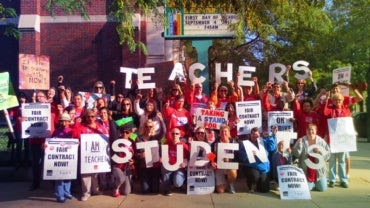
This article examines both the Bargaining for the Common Good (BCG) contract campaigns that have emerged among teachers unions in the years since the Great Recession and the #RedforEd strikes and mobilizations of 2018.
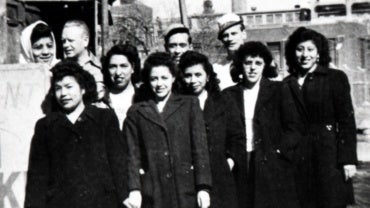
The Lawrence Textile Strike was a public protest mainly of immigrant workers from several countries, including Austria, Belgium, Cuba, Canada, France, England, Germany, Greece, Ireland, Italy, Lithuania, Netherlands, Norway, Poland, Portugal, Russia, Scotland, Spain, Syria, and Turkey. According to the 1910 census, 65% of mill workers (many of whom eventually struck) lived in the United States for less than 10 years; 47% for less than five years.
Welcome to The Dramas of Haymarket, an online project produced by the Chicago Historical Society and Northwestern University. The Dramas of Haymarket examines selected materials from the Chicago Historical Society’s Haymarket Affair Digital Collection, an electronic archive of CHS’s extraordinary Haymarket holdings. The Dramas of…