
Women Have Always Worked, an edX Course Exploration, 91-98
Video Gallery
Women Have Always Worked: Fighting for Equality: 1950–2018.
An exploration from an online edX course.

The following are video previews from the edX course “Women Have Always Worked” presented by Alice Kessler-Harris and Columbia University.
Women Have Always Worked: Fighting for Equality: 1950–2018.
An exploration from an online edX course.
This bibliography contains a number of titles dealing with “workers,” the “world of work” generally, and “labor law” in particular, so as to account for some of the more compelling reasons we should assiduously attend to the complex economic and moral questions (the former often…
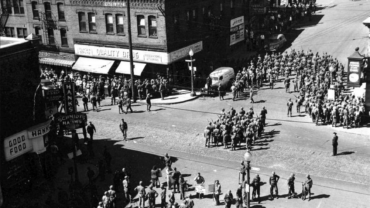
A gallery of photos to explore.
The Wisconsin Labor History Society is a volunteer-based organization working to record and catalogue the historical labor events of Wisconsin.
This article examines both the Bargaining for the Common Good (BCG) contract campaigns that have emerged among teachers unions in the years since the Great Recession and the #RedforEd strikes and mobilizations of 2018.
The members of United Teachers Los Angeles believe that neighborhood public schools should serve as the essential anchors of our communities. As educators we see first-hand what students need in our classrooms, our school, our clinics, and our neighborhoods, and we deal with the issues that too often prevent those needs from being met.
The site has been designed around the general idea of providing diversified, nonlinear access to digital audio content. Users can choose from a number of different modes of presentation, including audio essays, a timeline, strike map, and a user-friendly, yet very accurate search engine.
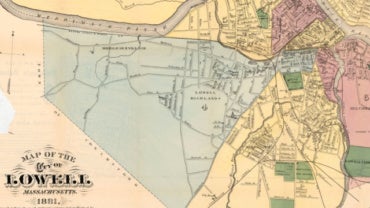
In 1820 Lowell, known as East Chelmsford, MA at the time, had a population of 200 and was a farming community. Thirty years later, the population had grown to 33,000 and one could find 32 textile mills in existence there. Lowell was an ideal location for these mills because it was located near the Merrimac River. The river supplied the water necessary to run these factories.
What Made the Battle of Blair Mountain the Largest Labor Uprising in American History. Its legacy lives on today in the struggles faced by modern miners seeking workers’ rights